Training · Nov 7, 2026
Rope Climb: Consistent Height Makes Your Reps Worth Comparing
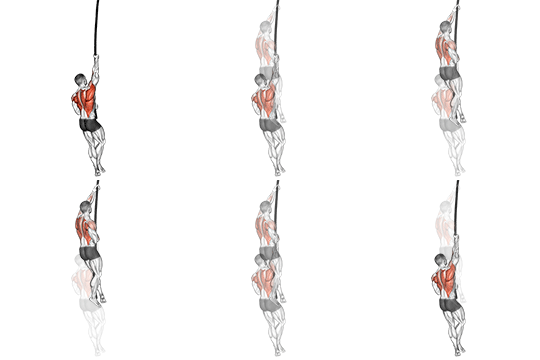
A rope climb counts for more when the height, leg assistance, and descent stay consistent. Set those standards before adding repetitions.
YourFit · Rope climb · back
Treat the rope climb as a back exercise with a defined task: climb to a chosen height, then return under control. Reaching higher is not automatically better training if the extra distance comes with a descent you cannot manage.
The useful question is not simply how many climbs you completed. It is how many you completed to the same height, with similar help from your legs and a controlled return. Establish that standard first, then use it to judge your next session.
Set the height before you start
Stand facing the rope with your feet shoulder-width apart. Take hold with both hands, palms facing toward you, then bend your knees slightly and engage your core. Make this a deliberate starting position rather than a quick pause before pulling. You want the first movement to belong to the climb, not to a rushed attempt to get moving. Keep the setup repeatable so that each repetition starts from the same position instead of changing as the set gets harder.
Choose your finishing height before the first pull. The top of the rope is an option, not a requirement; a lower chosen height gives you a clear range to repeat. Pick a distance that lets you control both the climb and the return. If you are unsure how much you can manage, use a shorter climb rather than discovering your limit above a distance you can descend confidently. The target should make the repetition clear, not pressure you into finishing at any cost.
Complete the climb and the return
Begin pulling yourself upward with alternating hand-over-hand movements, using your legs to assist. Keep your core engaged as you move, and give each hand movement enough control that you can continue without rushing. The aim is to reach the chosen height through a sequence you can repeat, not to make the first few pulls fast and hope the rest follows. Let your legs contribute, but pay attention to how much help they provide because that changes the demand of the climb.
Once you reach the chosen height, reverse the hand-over-hand movement and control your descent. For logging purposes, count one full repetition as the climb to your target and the controlled return to the starting position. Touching the target completes the upward portion, not the whole task. If the return becomes rushed or uncontrolled, stop adding repetitions. You have already lost part of the standard you intended to train, even if you still feel capable of another upward effort.
Do not buy reps with less range
The easiest way to inflate your rope-climb total is to let the finishing height creep downward. A set can look consistent on paper while each climb covers less distance than the one before it. Decide what counts before starting, and keep that decision when you become tired. If you stop below the chosen height, record that as a shorter climb rather than adding it to the total of completed repetitions. The work still happened; it simply was not the same task.
Another misleading improvement is completing more climbs by using more leg assistance while recording only the repetition count. Leg assistance belongs in this exercise, so using it is not a mistake. The problem is changing its contribution without acknowledging the change. The same applies to letting the descent become less controlled to finish sooner. Keep the height, assistance, and return consistent enough that an extra repetition reflects more work at the same standard, rather than a different version hidden behind the same name.
Make the task easier, then stricter
For an easier version, choose a lower finishing height and allow your legs to assist the upward movement. Keep the same standing setup and the same controlled hand-over-hand return. Reducing the climbing distance gives you less range to complete without removing the parts that make the repetition useful to practise. Do not turn the shorter target into permission to rush. Your first goal is a series of complete climbs that look consistent from the first repetition to the last.
For a stricter version, keep the finishing height unchanged and reduce how much your legs assist. Change that one variable rather than simultaneously climbing higher and attempting more repetitions. The stricter task should still include a controlled descent; less help on the way up does not excuse a hurried return. If you cannot maintain the chosen range, return to the previous level of assistance. You can also retain your usual assistance and extend the target height, but log that as a different range.
Log the standard beside the total
Write down the chosen climbing height, the number of complete repetitions in each set, how much leg assistance you used, and whether every descent stayed controlled. If you do not have a measured height, describe the same chosen endpoint clearly enough to use it again. Keep assistance notes plain: more help, usual help, or less help can be useful if you apply those descriptions consistently. Record shorter climbs separately so they do not disappear into a total that suggests every repetition met the target.
The number comparable next week is your count of complete repetitions at the same height, with similar leg assistance and controlled descents. Compare that number set by set rather than relying only on the session total. An additional complete climb under those conditions is a clear improvement. A higher target or less assistance can also represent progress, but it creates a changed task, so note it explicitly. Your log should show what improved and what stayed fixed, not just produce a larger number.
What to watch
- Set your target height first.
- Bend your knees; engage your core.
- Alternate hands and use your legs.
- Control the whole descent.
- Count only the range you chose.