Nutrition · Nov 4, 2026
Low-fat yogurt or Whole-milk Greek yogurt: which has more protein per 100 calories?
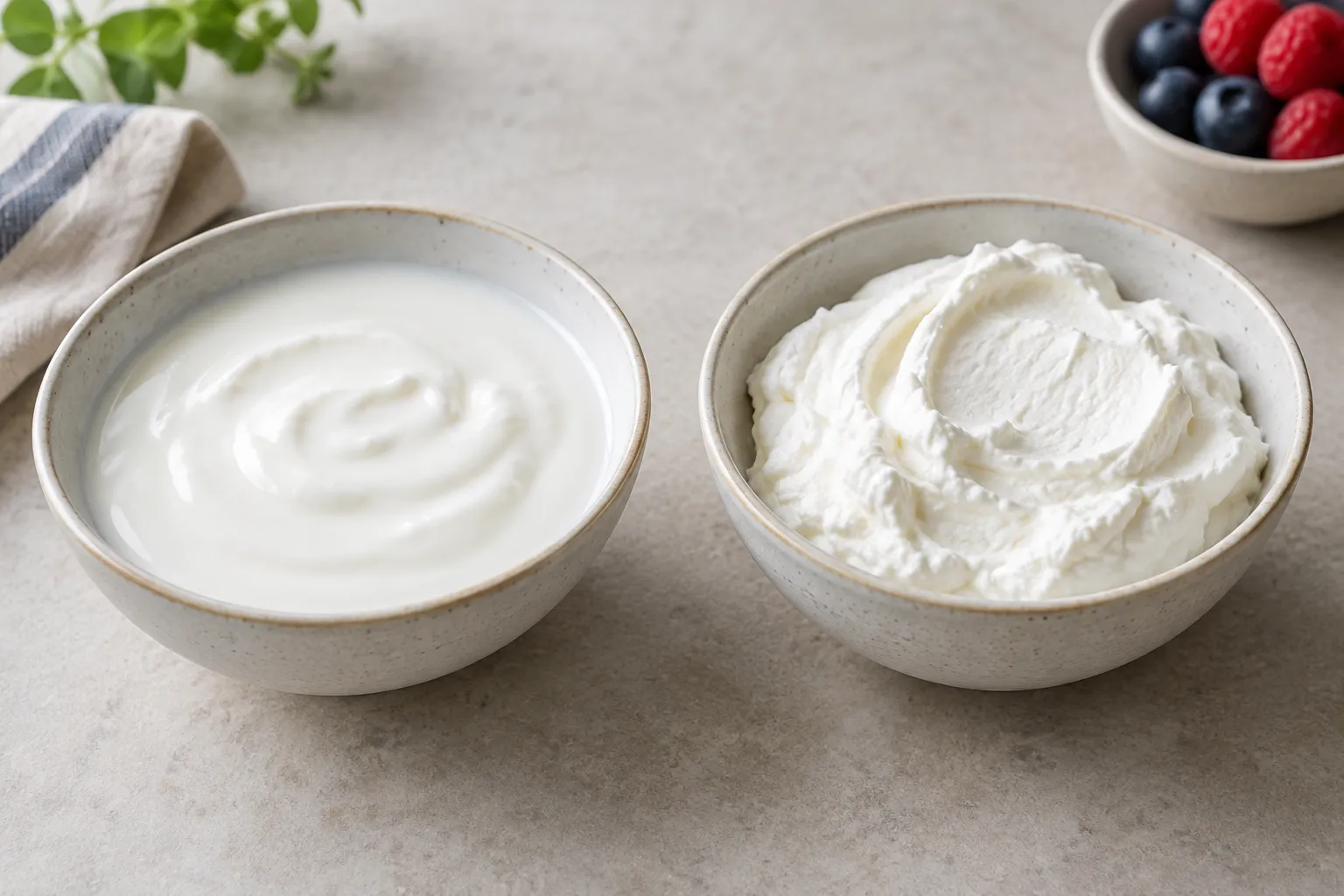
Whole-milk Greek yogurt has more protein per 100 calories in these two USDA records: 9.3 g versus 8.3 g for Low-fat yogurt. The difference is 0.9 g, calculated before rounding the displayed values.
What the USDA records measure
This comparison places plain low fat yogurt and plain whole milk Greek yogurt on an equal calorie basis rather than comparing matching weights or assuming identical serving sizes. Each record is scaled to the same calorie reference used in the accompanying table, allowing the nutrient entries to be viewed against a consistent energy allowance. The foods are considered as described in their USDA records, ready to eat as plain yogurt rather than cooked or incorporated into a recipe. This method is a comparison tool, not a suggested snack portion or a prediction of what someone will actually eat.
| USDA food and preparation | Protein per 100 kcal | Energy per 100 g |
|---|---|---|
| Whole-milk Greek yogurt, greek, plain, whole milk | 9.3 g | 97.0 kcal |
| Low-fat yogurt, plain, low fat | 8.3 g | 63.0 kcal |
g protein per 100 kcal
The chart uses protein per 100 kcal, calculated as protein per 100 g ÷ kcal per 100 g × 100. The table and chart use the same rounded values.
Choosing food for a meal
For a plain yogurt snack, start with the style you enjoy and the portion you expect to eat. Plain low fat yogurt may suit your preference, while plain whole milk Greek yogurt may suit someone else; the comparison does not establish a universal choice. Use the table to review the nutrients that matter to your preferences, then check the label on the yogurt you actually buy. Because snack portions vary, an equal calorie comparison may not describe your usual bowl or container. Let the comparison inform your choice without treating its reference portion as a serving instruction.
Where this comparison stops
These exact USDA records describe particular entries, not every yogurt sold under similar names. They cannot represent all brands or recipes, and their values should not be transferred automatically to products outside those descriptions. A package labeled plain low fat yogurt or plain whole milk Greek yogurt still needs its own label checked before you apply this comparison to your snack. Recipe changes and differences in product formulation can limit how closely a purchase matches the selected record. Read the comparison as specific to these entries, rather than as a guarantee about an entire yogurt category.
These results apply only to the named USDA records and preparation states. Equal calories need not mean equal portions by weight. Check the product label when using a different brand or recipe.
Sources
U.S. Department of Agriculture, FoodData Central. Nutrient values were fetched from the linked food-detail records.