Training · Nov 5, 2026
Resistance Band Seated Straight Back Row: Count Pulls, Not Body Swing
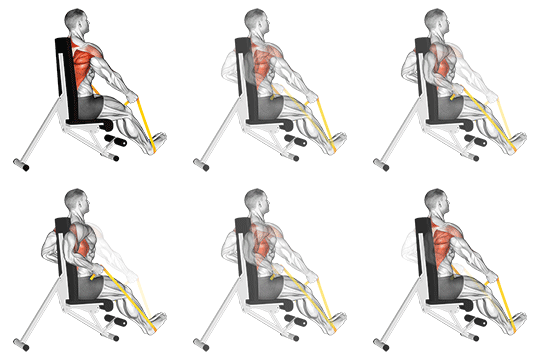
Keep your seated position steady so each pull measures back work, not momentum. Log controlled reps over a repeatable range before chasing a bigger number.
YourFit · Resistance band seated straight back row · Back
The resistance band seated straight back row gives you a straightforward task: pull the band toward your chest without turning the movement into a backward lean. The useful number is not how many times your hands move. It is how many repetitions you complete with a consistent starting position, a clear squeeze, and a controlled return.
Treat your first repetitions as the standard for the set. Notice where your hands begin, how far they travel, and whether your seated position stays steady. When those details change, the repetition count becomes harder to interpret. A smaller, repeatable set tells you more about your back training than a longer set built on progressively looser movement.
Set a position you can keep
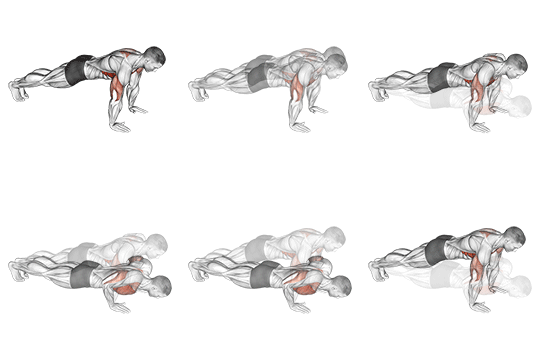
Sit on the floor with your legs extended and loop the resistance band around your feet. Hold the ends with your palms facing each other. Keep your back straight, engage your core, and lean slightly back. That slight lean is your working position, not a movement you repeat to help each pull. Before starting, establish where your hands rest with the band held and where your torso sits. Those reference points make the rest of the set easier to judge.
Do not treat the setup as disposable once the repetitions become difficult. If you begin each pull from a different position, you are changing the task while counting it as the same exercise. Use the opening repetition to check that you can pull toward your chest and return without rearranging yourself. The catalogue does not specify a band resistance or an exact pulling distance. Make your chosen setup repeatable rather than trying to match an unsupported measurement or position.
Finish both halves of the rep
From your established position, pull the resistance band toward your chest while squeezing your shoulder blades together. Keep your back straight and maintain the slight backward lean you set at the start. The pull should bring your hands toward you; it should not depend on moving your torso farther away from your feet. At the top, pause for a moment. Make that pause clear enough that you can distinguish a finished pull from a repetition that immediately rebounds into the return.
Then slowly release the tension and return to your starting position. The return is part of the repetition, not simply the space between pulls. Keep control as your hands move away, and finish at the same starting range you used before. You do not need an invented tempo to make this useful. You need a visible pause at the top and a return that stays deliberate. Count the repetition only after you have completed that return without changing your seated position.
The lean that pads the count
The easiest way to inflate the number is to turn the slight backward lean into a repeated body swing. As the set gets harder, you lean farther back during the pull, then move forward again on the return. Your hands may still approach your chest, but their travel no longer tells the same story. Some of the movement now comes from changing your torso position. That makes the later repetitions different from the early ones, even if the count keeps rising.
Watch for the first repetition where you need extra lean to finish. Do not automatically credit it as another repetition under the original standard. Either end the set there or record that the remaining repetitions used a different standard. Also watch for a shrinking return or a disappearing pause, since both can make a higher count look more convincing than it is. The goal is not to make every set look easy. It is to keep the difficulty from quietly rewriting the exercise.
Make it easier, then stricter
For an easier version, use a shorter pulling range that you can control while keeping the same straight back and slight lean. Pull toward your chest within that range, pause, and return slowly to the same start each time. This is a deliberately reduced-range version, not a full-range set with the difficult part omitted from the record. Use it to practise consistent movement when your longer range becomes uneven. Write down the reduced range so the repetition total has an honest reference.
For a stricter version, use your established longer range while making the top pause and slow return unmistakable. Keep your torso position unchanged from the first pull to the last. Stricter does not mean adding an extra movement or inventing a new endpoint; it means removing the shortcuts that blur the existing repetition. Expect the count to fall if you previously rushed the return or leaned farther back. Compare this version with other equally strict sets, not with your highest number under looser conditions.
Log the standard beside the number
Record the band you used, the repetitions in each set, and enough setup detail to recreate the session. Include your grip on the band, your starting hand position, and whether you used your usual range or a reduced one. Add a short note about the top pause, the controlled return, and any extra torso movement. You do not need a long description after every set. A few consistent phrases are more useful than a detailed entry that changes its language every week.
The number comparable next week is the count of controlled repetitions completed with the same band, setup, range, pause, and return standard. If you change one of those conditions, label the change rather than treating the new total as a direct improvement. For example, more repetitions with a shorter range do not establish progress over fewer repetitions through your usual range. First look for more repetitions under matching conditions. If the count stays the same but control becomes clearer, note that improvement without overstating what the number proves.
What to watch
- Set the slight lean; keep it there.
- Pull toward your chest.
- Squeeze and pause.
- Return slowly to the same start.
- Count controlled reps, not swings.