Nutrition · Nov 4, 2026
Lentils or chickpeas: which has more protein and fiber per 100 calories?
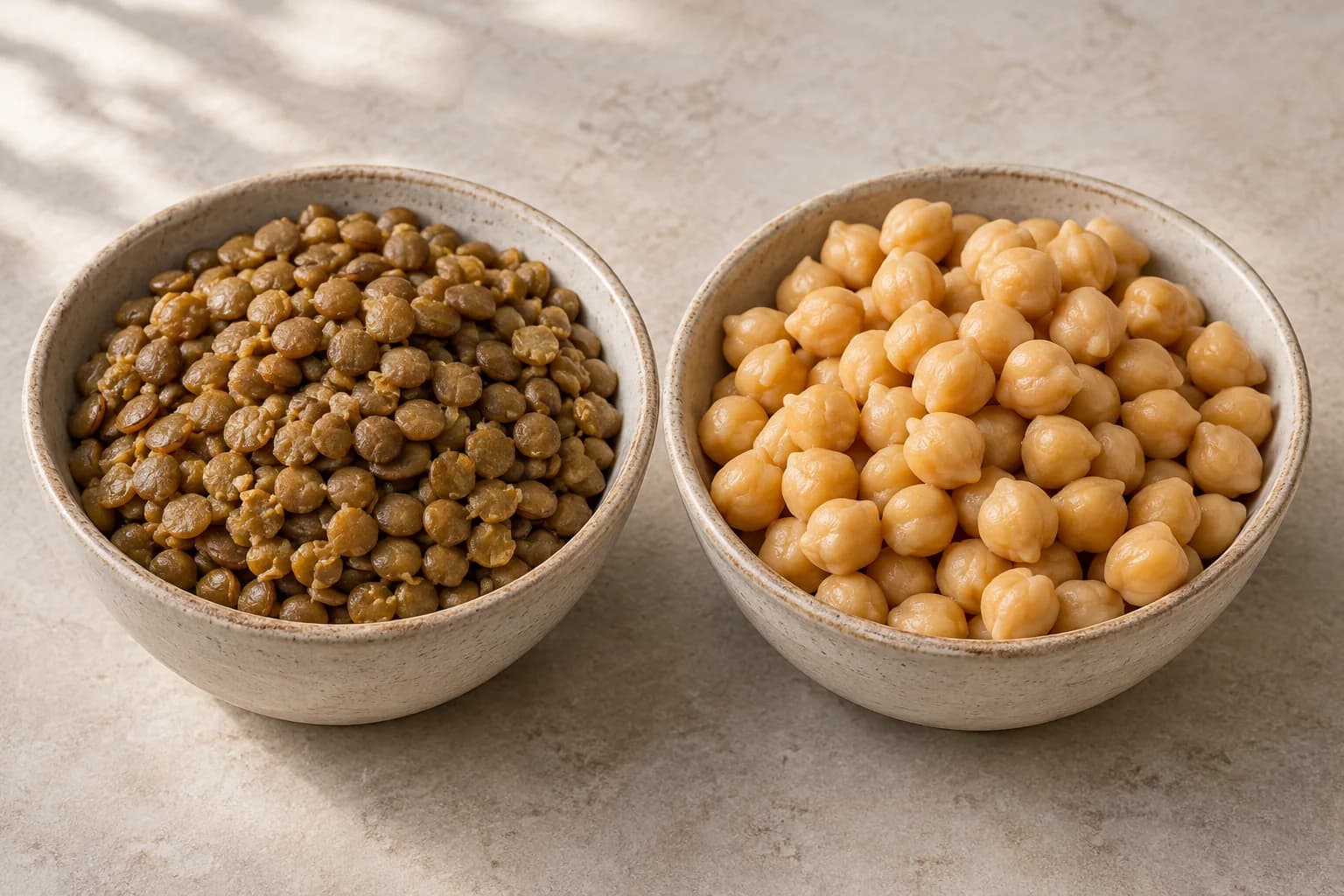
Boiled lentils provide more protein and fiber than boiled chickpeas at the same 100-calorie amount in these USDA records. Lentils have 7.8 g of protein per 100 kcal; chickpeas have 5.4 g. The difference is 2.4 g of protein, calculated from the unrounded values before rounding for display.
What exactly was compared?
The comparison uses USDA FoodData Central's SR Legacy entries for mature lentil seeds and mature chickpea seeds, both cooked by boiling without salt. It compares the edible cooked food, not dry seeds, canned beans, hummus, or a recipe with oil. Both records list nutrients for 100 g, so the 100-calorie figures below are calculated from those values.
| Cooked food, boiled without salt | Protein per 100 kcal | Fiber per 100 kcal | Energy per 100 g |
|---|---|---|---|
| Lentils | 7.8 g | 6.8 g | 116 kcal |
| Chickpeas | 5.4 g | 4.6 g | 164 kcal |
g protein per 100 kcal
The chart shows protein per 100 kcal. Lentils also supply 2.2 g more fiber per 100 kcal when the difference is calculated before rounding. These are comparisons at equal energy, not equal spoonfuls or equal weight.
How does this help with a meal?
If you are choosing a cooked legume for a bowl or side dish and want more protein and fiber within the same calorie amount, the lentil entry comes out ahead. You could add either food to a meal for other reasons, including taste and texture. The table answers only the protein-and-fiber question for these two specified preparations.
At equal weight, the picture is narrower: 100 g of lentils contains 9.02 g protein and 7.9 g fiber, while 100 g of chickpeas contains 8.86 g protein and 7.6 g fiber. Chickpeas are more energy-dense in these records, which is why the gap widens when the comparison changes to 100 kcal. A serving you actually put on a plate may weigh more or less than 100 g. Weighing the cooked portion, if you need a precise comparison, keeps the basis consistent.
Cooking changes the weight because legumes absorb water. Do not apply these cooked-food numbers to 100 g of dry lentils or dry chickpeas. A canned product may also differ, especially if it is compared with its liquid or after draining.
The result belongs to these two USDA entries. It does not mean every lentil dish has more protein or fiber per calorie than every chickpea dish: added ingredients and the final water content can change the numbers. For a packaged product, use its label or its own USDA entry.
Sources
U.S. Department of Agriculture, FoodData Central. Values are per 100 g of the named cooked food; per-100-kcal amounts were calculated as nutrient per 100 g ÷ kcal per 100 g × 100.