Training · Oct 24, 2026
Pull-ups are won at the bottom of the rep
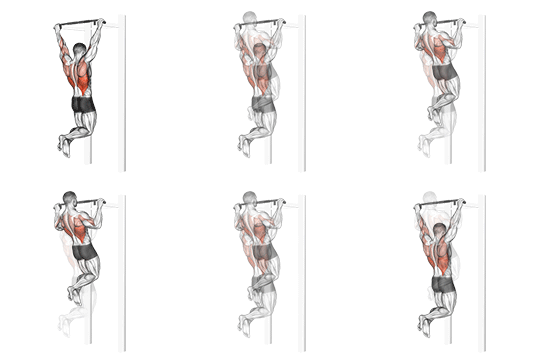
Chin over the bar is the part everyone films. The rep starts from straight arms, and a half hang is a shorter exercise.
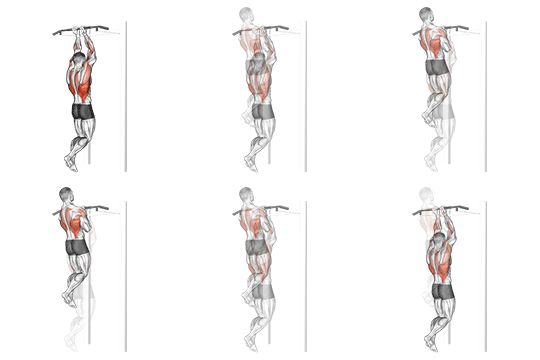
YourFit · Pull-up · Back, biceps
The photo is always the chin over the bar. The pull-up is won lower than that. Palms facing away, arms straight, shoulders active, then the chest pulled toward the bar and lowered back to that same straight-arm hang. Skip the bottom and you have invented a shorter exercise than the one in the YourFit gif.
There is nowhere to hide a weak back. The bar does not move. Your body does. That is why the exercise is worth keeping even when the number is one or two, and why a sloppy five should not replace a clean three in the log.
The hang is part of the rep
Take the bar with the palms facing away, about shoulder width or a little wider. Hang until the arms are straight. The shoulders stay active, pulled slightly down and into their sockets, not shrugged up beside the ears and not so relaxed that you are dangling on the ligaments. A dead hang here means straight elbows with the shoulders still working. It does not mean a collapsed shrug.
If you cannot hold that position quietly, the set is not ready for a pull. Practice the hang. A pull that starts from bent arms has already thrown away the hardest part and the part that makes next week's rep comparable.
Pull the elbows down
Start the rep by bringing the shoulder blades down and together, then bend the elbows and pull the chest toward the bar. Think about the elbows driving toward the ribs, not about craning the chin over the line. The chin clears the bar because the body rose. The neck does not get to finish the job.
Lower until the arms are straight again. A controlled lower is still part of the rep. Dropping off the bar and catching the next one at half height is how people turn three pull-ups into a story about eight.
Half reps and borrowed momentum
The common cheat is a small range: a bend in the arms at the start, a kick, and a chin that just clears because the head tilted back. It looks busy on video. It is a shorter pull-up. Kipping, a deliberate swing used in a different sport, is also a different exercise. Do not log it as this one.
A set falls apart when the shoulders rush up to the ears and the chest stops moving. That rep does not count, and the ones after it usually do not either. Rack the number you owned.
If a full pull-up is not there yet
That is normal. A band under the foot or knee, a partner holding the feet, or a slow lowering from the top still trains the same muscles if the arms finish straight and the shoulders stay organized. Jumping to the top and then falling through the bottom does not. Own the reps you can finish.
When bodyweight reps are clean, add one before you add weight. Then a pause with the chin over the bar. Then a slower lower. A dumbbell between the feet, or a belt, comes after the shape survives those. Write the variation in the note every time: band, bodyweight, or added weight.
Five has to mean five
Five clean pull-ups next month should be comparable to five clean pull-ups today. That only works if both sets started from straight arms and neither one used a kick. The comparison is the reason the exercise lives in the workout log instead of only in a highlight clip.
YourFit stores the gif next to the name so the movement you log is the movement on the screen. If the set stopped looking like it, the set is over, even if you still had some bending left in the arms.
What to watch
- Start from straight arms, shoulders active, not shrugged to the ears.
- Pull the elbows down. Do not crane the chin up.
- Lower under control until the arms are straight again.
- A kick or a half hang is a different exercise. Log it that way, or do not log it.
- Add a rep before you add weight.