Training · Oct 26, 2026
Bench press form starts in the shoulder blades
The bar is the part people watch. The set is won or lost by the grip, the upper back, and whether the bar touches the same place every rep.
YourFit · Barbell bench press · Chest, front shoulders, triceps
People watch the bar. The bench press is decided before the bar moves. Feet on the floor, shoulder blades pulled together, a grip you can keep, and a bar path that touches the same part of the chest on every rep. Miss any of those and the number on the bar is a souvenir, not a record.
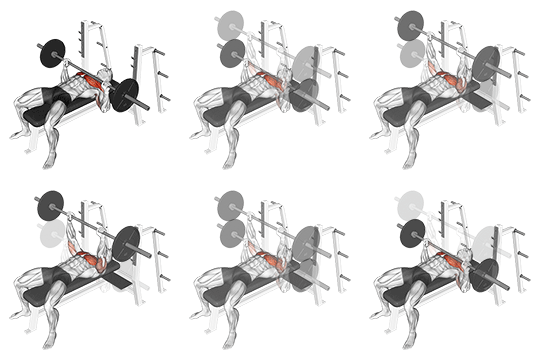
The gif in YourFit is the standard barbell bench: eyes under the bar, grip a little wider than the shoulders, bar lowered to the lower chest and pressed back up. It trains the chest, the front of the shoulders and the triceps. It does not train them if the upper back is loose and the bar is bouncing.
Set up once, then leave it alone
Lie down so the eyes are under the bar. Feet flat on the floor, not tucked so far under the bench that the hips lift off the pad. A small arch in the upper back is fine. A bridge that turns the bench into a leg press is a different lift, and it should not be logged as this one.
Take a grip a little wider than the shoulders. Squeeze the bar. The wrists stay stacked over the forearms, not bent back so the bar sits in the palm near the fingers. If the wrists fold hard, the grip is too wide or the bar is too high in the hand. Pull the shoulder blades together and down before the bar leaves the rack, and keep them there for the whole set.
The path of the bar
Unrack the bar and hold it over the shoulders with the arms straight. Lower it to the lower chest, around the bottom of the sternum, with the elbows under the bar rather than flared out in a T. Touch. Do not sink the bar into the chest and do not stop three inches above it and call that depth, unless you log the shorter range on purpose.
Press up and slightly back toward the rack, so the bar finishes over the shoulders, not over the belly. A bar that travels straight up from the stomach has usually been lowered too far down the body. Lock the elbows at the top if you can do it without the shoulders rolling forward off the bench.
Ugly reps have a pattern
A loose upper back is the usual one. The shoulder blades slide apart on the way down, the bar drifts, and the shoulders feel the rep in the joint instead of the chest. Set the back once. If it comes undone, rerack. Bouncing the bar off the chest is the second pattern. The bounce is not strength. It is a refund of the lowering you refused to control.
Heels that dance, a grip that walks out wider each set, and a spotter who lifts the bar from the chest are the rest of the family. Any of them can produce a number. None of them belong in the same history as a clean set.
A spotter is part of the setup
Once the bar is heavier than you can put back on the rack alone, you need a spotter or safeties. Pride is not a safety pin. The spotter helps you unrack if you ask, then stays with the bar without touching it. A lift that needed a tug out of the bottom gets logged as the last clean rep, or it gets a note.
To make a manageable weight stricter, slow the lowering and pause for a second on the chest with the back still tight. That pause removes the bounce and shows whether the weight is real. Add load only after the paused reps are still the same shape as the gif.
Write the bar weight, not a feeling
Record the weight on the bar and the reps you finished yourself. Do not add the guess of what you could have done. Last month's set is only useful if it is still on the page and it describes the same grip and the same touch point.
YourFit keeps that number next to the exercise, so the next session starts from a fact. If the grip changed or a spotter helped, write it in the note. Five clean reps next month should be comparable to five clean reps today.
What to watch
- Feet stay planted. Do not walk them under the bench until the hips lift.
- Pinch the shoulder blades before the bar leaves the rack.
- Wrists stacked. The bar does not sit up by the fingers.
- Touch the lower chest, then press up and slightly back.
- A spotter's help means that rep was not yours.