Training · Nov 11, 2026
Side-to-Side Toe Touch (Male): Consistent Reach Makes Reps Comparable
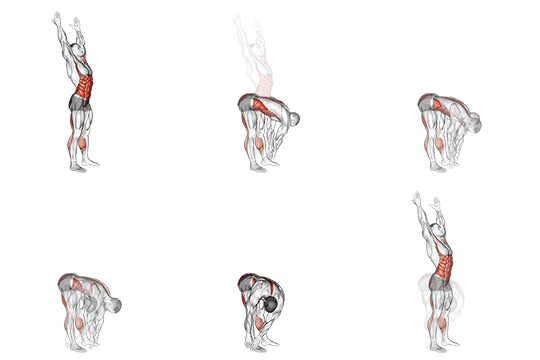
A deeper reach is not automatically a better rep. Keep the side bend controlled, count both sides consistently, and log a range you can repeat.
YourFit · Side-to-side toe touch (male) · Abs
The side-to-side toe touch is an abs exercise where the number can improve without the movement improving. Shorten the reach, rush the return, or count each side differently, and a bigger total tells you very little. Give every repetition a clear start, a repeatable reach, and a controlled return.
The name is not a requirement to touch your toes. Reach towards the foot on the same side, using a range you can control. For YourFit logging, treat a right-side bend and a left-side bend together as one full repetition. That convention gives you a useful way to compare sets.
Set a repeatable starting position
Stand with your feet shoulder-width apart and extend your arms out to the sides. This is your starting position and the position you return to between bends. Take a moment to establish it before the first reach rather than moving straight into a loose side-to-side rhythm. Your setup should be easy to recognise on every repetition: the same foot spacing, the same arms-out position, and a clear return before you change direction. Consistency here makes the rest of the set easier to judge.
Choose your working range by how well you can control the bend and return, not by whether your hand reaches your foot. The catalogue asks you to reach towards the foot; it does not require contact. Use the first few bends to identify a reach you can repeat on each side without rushing. If the two sides have different available ranges, note that rather than forcing them to look identical. Keep the setup unchanged so you can tell whether range or control actually improves.
Complete both sides before counting
From the starting position, bend at the waist to the right and reach your right hand towards your right foot. Keep your left arm extended to the side. Move only as far as you can manage with control, then return to the starting position. That return matters: it separates the right-side bend from the left-side bend and gives you a clear checkpoint. Do not count a deeper reach as successful if you cannot bring the movement back under the same level of control.
Next, bend at the waist to the left, reaching your left hand towards your left foot while your right arm remains extended to the side. Return to the starting position again. For the counting convention used here, that right-and-left sequence is one full rep. Continue alternating in that order for your chosen number of repetitions. There is no prescribed speed in the exercise description, so use a pace that lets you recognise each reach and each return rather than letting the movement blur together.
Do not let shorter reaches pad the total
The easiest way to inflate your score is to let the reach shrink as the set goes on. Early repetitions may travel towards the foot with a clear bend, while later ones become small movements that still get counted. The total rises, but the task has changed. Watch for the first repetition that no longer matches the range you established at the start. Either restore that range with control or end the set; do not quietly redefine the repetition to keep the number climbing.
Rushing can hide the same problem. If you sweep through the starting position without clearly returning to it, you lose a useful check on each side. Counting can also mislead: ten individual side bends are not ten right-and-left repetitions under this article's convention. Neither counting method is inherently useful without a definition attached. Pick one and keep it. A set with fewer complete, repeatable repetitions gives you a clearer training record than a longer set built from changing ranges and ambiguous counts.
Make it easier, then make it stricter
To make the exercise easier, reduce how far you reach towards each foot. Keep the shoulder-width stance, the arms extended to the sides, and the alternating same-side reaches. You are changing the range, not replacing the exercise with a different movement. Select a shorter reach that allows a controlled return on both sides. If maintaining that standard becomes difficult, finish the set sooner. There is no benefit in chasing the foot when doing so makes your chosen range or return impossible to repeat.
For a stricter version, keep your established range and make every return to the starting position unmistakable before the next bend. Avoid treating stricter as a demand to reach farther immediately. First show that you can repeat the same movement without shortening late repetitions or rushing the change of direction. When that standard is consistent, you can explore a slightly greater reach while preserving control. Log the change, because repetitions performed through a greater range are a different comparison from repetitions at your previous range.
Log the standard beside the number
Write down the number of complete right-and-left repetitions, your working range, and whether the final repetitions matched the first ones. Describe range in plain language that you can recognise again, such as a shorter reach towards each foot or the same reach used last session. Include any noticeable difference between sides. Also record whether the returns stayed controlled or became rushed. These notes do not need to be elaborate; they need to explain what the repetition total actually represents when you review it later.
The number comparable next week is the count of complete right-and-left repetitions performed with the same setup, working range, and control standard. If you record twelve repetitions today and fourteen next week using shorter reaches, fourteen is not evidence of improvement at the original task. If you increase your range instead, mark that as a changed standard rather than forcing a direct rep comparison. Build your record around repeatable work: the total matters only when the movement behind that total stays sufficiently consistent to judge.
What to watch
- Feet shoulder-width; arms out.
- Reach towards the same-side foot.
- Return clearly before switching sides.
- Keep the reach consistent.
- Right plus left equals one rep.