Nutrition · Nov 10, 2026
Whole-milk Greek yogurt or Low-fat Greek yogurt: which has more protein per 100 calories?
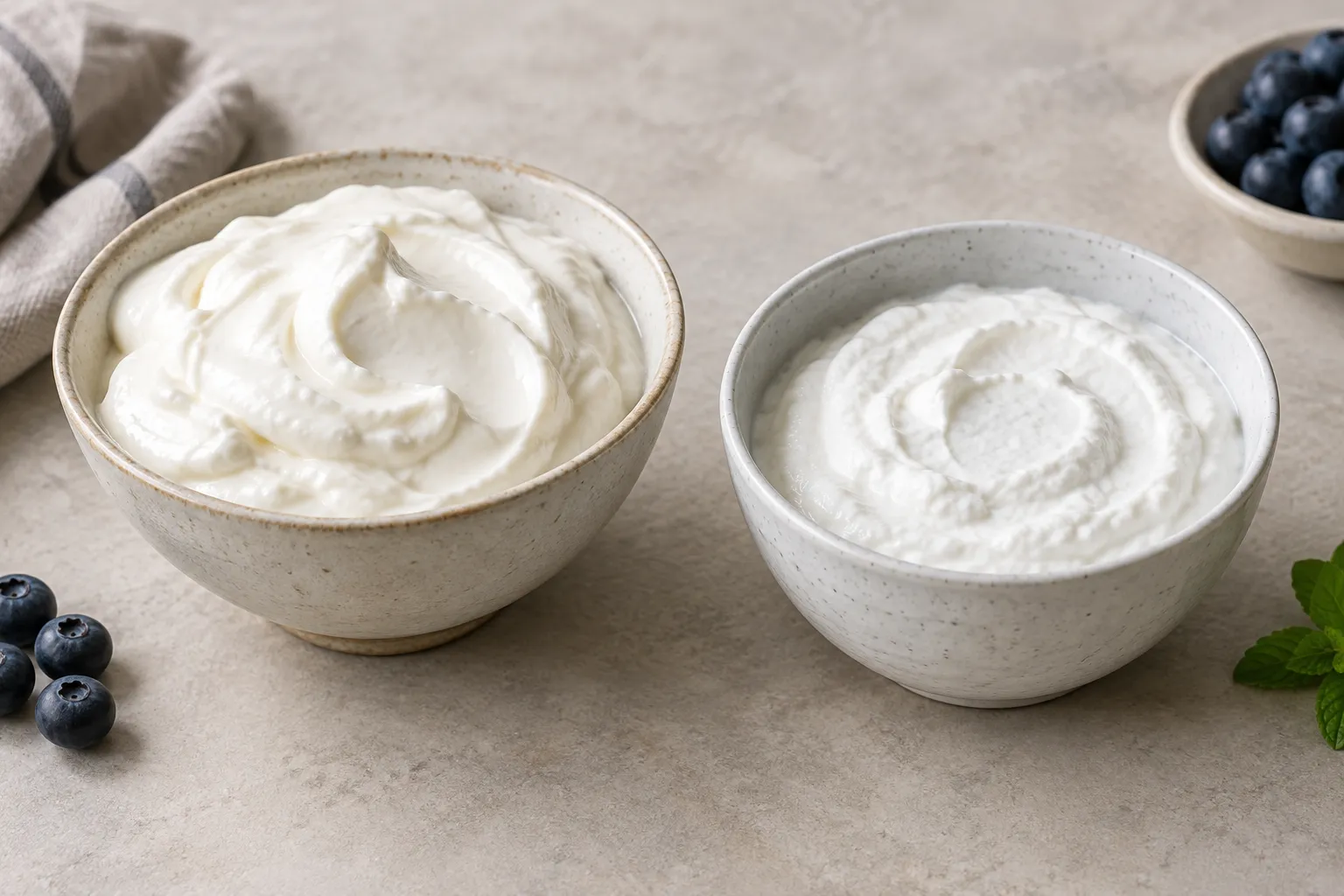
Low-fat Greek yogurt has more protein per 100 calories in these two USDA records: 13.6 g versus 9.3 g for Whole-milk Greek yogurt. The difference is 4.4 g, calculated before rounding the displayed values.
What the USDA records measure
The comparison places both yogurts on the same calorie basis used in the accompanying data, rather than comparing equal weights or assuming identical serving sizes. This approach shows how their nutrient profiles compare when the energy allowance is held constant. The foods are plain Greek yogurt made with whole milk and plain Greek yogurt made with low fat milk, in their ready to eat state. Neither record should be read as describing a flavored yogurt or a finished snack with additions. The comparison therefore concerns the specified yogurts themselves, not every possible way of serving them.
| USDA food and preparation | Protein per 100 kcal | Energy per 100 g |
|---|---|---|
| Low-fat Greek yogurt, greek, plain, low fat | 13.6 g | 73.0 kcal |
| Whole-milk Greek yogurt, greek, plain, whole milk | 9.3 g | 97.0 kcal |
g protein per 100 kcal
The chart uses protein per 100 kcal, calculated as protein per 100 g ÷ kcal per 100 g × 100. The table and chart use the same rounded values.
Choosing food for a meal
For a plain yogurt snack, choose between the whole milk and low fat options according to your preferences and the nutrient information that matters to you. Texture and flavor can help guide the decision, but assess the actual product rather than assuming every yogurt in either category feels or tastes alike. Your usual portion may differ from the calorie-matched portions used for comparison, so consider how much you actually serve. If you eat directly from an individual container, check its serving information instead of treating the package as equivalent to the comparison portion.
Where this comparison stops
These exact USDA records describe specific entries and cannot represent all brands or recipes. Brands may use different product formulations, so a yogurt with a similar name need not match the accompanying nutrient data. Read the label on the product you buy, especially when comparing whole milk and low fat versions from different manufacturers. Additions such as fruit or sugar also change what is being compared: a prepared snack containing either is no longer the plain yogurt described here. Use the records as a defined reference, not a universal description of Greek yogurt.
These results apply only to the named USDA records and preparation states. Equal calories need not mean equal portions by weight. Check the product label when using a different brand or recipe.
Sources
U.S. Department of Agriculture, FoodData Central. Nutrient values were fetched from the linked food-detail records.